-

Modeling 2014 – D Givens (mov)
This is a freshman class in the semester system. Students are introduced to Maya and the 3D space and then led through various modeling exercises. Concepts of character design are also discussed and are visible in the final results of their projects. Self-portrait created for my freshman modeling class where students were asked to make…
-
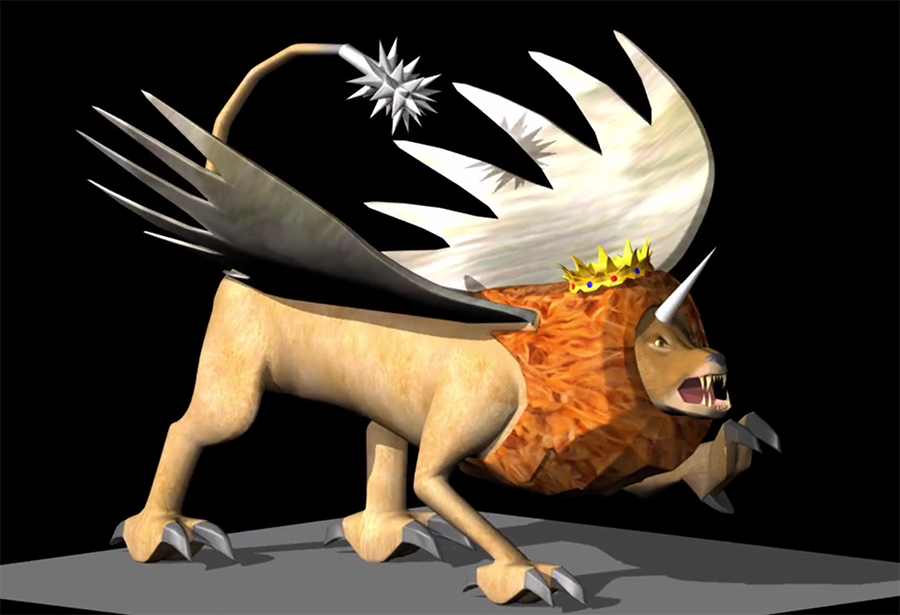
Modeling 2013 – J Hyun (mov)
This is a freshman class in the semester system. Students are introduced to Maya and the 3D space and then led through various modeling exercises. Concepts of character design are also discussed and are visible in the final results of their projects. Hybrid Creature is a project from my freshman modeling class where students were…
-

Modeling 2013 – J Rathke (mov)
This is a freshman class in the semester system. Students are introduced to Maya and the 3D space and then led through various modeling exercises. Concepts of character design are also discussed and are visible in the final results of their projects. The Character Style Turnaround is a project from my freshman modeling class. Students…
-

Modeling 2013 – Y Agresta (mov)
This is a freshman class in the semester system. Students are introduced to Maya and the 3D space and then led through various modeling exercises. Concepts of character design are also discussed and are visible in the final results of their projects. Hybrid Creatures is a project from my freshman modeling class where students were…
-

Personal Work
I have been an art student all my life and as such, worked in many mediums before discovering the world of animation. This is a series of images of past works:
-
Modeling 2013 – M Cruz
This is a freshman class in the semester system. Students are introduced to Maya and the 3D space and then led through various modeling exercises. Concepts of character design are also discussed and are visible in the final results of their projects. The Shaman Turntable was made in my freshman modeling class. Students were asked…
-
Oregon Lottery: Santa’s Beard
This is a fun production I joined as an assistant rigging artist at Nathan Love. I was in charge of finishing 6 of the characters seen here:
-
Food Fight!!
Worked on the MunnyWorld Food Fight project as a rigging artist, animator and render wrangler.
-
Modeling a Face
Modeling in 3D can be fun and occasionally frustrating but nothing is more painful that trying to model a face that can deform without breaking when it moves. If you are studying topology then you understand what I mean when I say that. In my opinion, the true skill of modeling comes in when a…
-
14 Steps to Handle Graduating with an Animation Degree
Once the grueling process is over and you have officially collected that coveted degree in Animation, life can suddenly seem full of possibilities and yet utterly petrifying. The level of petrifying depends on how optimistic a person you are but I think it is common to feel a little lost. Having been through this process…